THE SOVEREIGN MANIFESTO
Prologue: The Linear Death
For four decades, human-computer interaction was fundamentally subservient. We dictated explicit, linear commands; the machine executed them. If a variable deviated, the script fractured. This was the era of hardcoded fragility.
We are no longer bound by syntax. We have entered the epoch of Thought AI and Agentic swarms. An agent does not wait for a command; it is bestowed with a G04L, armed with tools, and unleashed to iteratively solve, adapt, and execute. It is software that possesses synthetic autonomy.
MENS MERCATUS was forged in this paradigm shift. We do not build apps; we construct sovereign, thinking architectures designed to thrive in the chaotic socio-economic landscape of the global South.
The Agentic Paradigm
How does a Sovereign System actually think? It breaks away from linear logic and enters a recursive loop of observation, planning, and execution.
"An algorithm tells a machine exactly what to do. An agent tells a machine exactly what we want, and lets the machine figure out how to get it."
The Sovereign Suite
MENS MERCATUS encapsulates an elite suite of intelligent applications spanning the spectrum from high-frequency financial modeling to agricultural forecasting.
Cognitive Alpha Hub
Real-time order flow and L1 liquidity mapping utilizing institutional-grade algorithmic visualization. A decentralized terminal for extreme financial telemetry.
Fintech Sentinel
LSTM and Isolation Forest anomaly detection for immediate interdiction of synthetic identity fraud and Remote Access Trojans in banking apps.
Logi-Flow SA
Google OR-Tools powering dynamic, real-time routing optimization for the complexities of last-mile logistics in the sprawling township economy.
Grid-Guardian
A localized Virtual Power Plant utilizing Prophet forecasting to combat municipal debt spirals through optimized battery micro-cycling.
Agri-Intelligence
AI-driven predictive crop modeling synthesizing IoT telemetry and meteorological data to drastically reduce water expenditure in arid regions.
Agentic Coding Engine (ACE)
A completely autonomous sub-system that iteratively plans, writes, and deploys high-grade Python/Node logic directly into active deployment environments.
Mercatus Sentiment
Mass-scale Natural Language Processing (NLP) pipelines that aggregate and map real-time socioeconomic sentiment across 11 local dialects.
> ESTABLISHING LOCAL LLM NODE...
> CONNECTION: ENCRYPTED (AES-256)
> EXTERNAL TELEMETRY: BLOCKED
> S0V3R31GNTY_STATUS: 100%
> READY.
Mercatus Gazette Report
Strategic Evaluation of the MENS MERCATUS AI Portfolio
The intersection of advanced artificial intelligence, distributed frontend architectures, and emerging market socio-economics presents an intricate operational matrix. The MENS MERCATUS portfolio operates directly within this complex environment. Etymologically derived from the Latin for "market sentiment" or "market mind," the MENS MERCATUS identity historically traces its digital footprint to sophisticated financial systems analysis, including decentralized finance (DeFi) and algorithmic portfolio management.
In 2026, this entity has formalized into a comprehensive, fully coded blueprint encompassing high-impact artificial intelligence and frontend applications tailored specifically for the South African technology job market.
South Africa in 2026 is defined by a series of profound paradoxes. The nation boasts highly sophisticated financial and digital infrastructure, yet it is simultaneously grappling with extreme structural deficits, including soaring municipal debt, severe water scarcity, unprecedented levels of digital banking fraud, and critical logistical bottlenecks stemming from its unique spatial geography.

Part 1: The Technological Job Market and the Human Capital Paradox
To understand the strategic positioning of the MENS MERCATUS portfolio, one must first analyze the volatile labor market into which it is being introduced. The South African job market in the first quarter of 2026 is characterized by a severe structural contradiction. According to the latest Quarterly Labour Force Survey, the broader national unemployment rate has escalated to 32.7%, leaving approximately 8.1 million citizens jobless. The crisis is most acute among the youth, where the rate has reached a staggering 45.8%, creating a "lost generation".
Conversely, the corporate technology sector—particularly concentrated in the economic hub of Gauteng—is experiencing an acute and persistent shortage of highly skilled engineering professionals. This juxtaposition highlights a systemic failure in the traditional education-to-employment pipeline, resulting in a profound skills mismatch.
Data from the Pnet Job Market Trends Report for April 2026 illustrates this disconnect empirically. While 54% of advertised information technology roles explicitly required a degree, only 36% of the applicant pool possessed these formal qualifications. The rapid proliferation of artificial intelligence has fundamentally altered the corporate recruitment heuristic. AI-driven tools are increasingly automating routine, entry-level coding tasks. As a result, 38% of employers report an intention to hire fewer traditional graduates, focusing instead on candidates who can demonstrate immediate workplace readiness, advanced problem-solving capabilities, and applied technological intuition.
Part 2: FINTECH SENTINEL and the Evolution of Fraud
The rapid digitalization of the South African economy has precipitated an unprecedented expansion of the financial technology sector. However, this growth has been mirrored by an explosion in sophisticated financial crime.
FINTECH SENTINEL is an advanced, real-time AI-powered fraud detection system. It continuously monitors financial transactions to identify suspicious patterns and flag potential fraud with high accuracy. The backend pipeline is engineered in Python using FastAPI for highly concurrent data handling. The artificial intelligence engine utilizes a hybrid model: Scikit-learn's Isolation Forest algorithm is deployed for spatial outlier detection, while TensorFlow/Keras is used to construct Long Short-Term Memory (LSTM) networks for sequential anomaly detection.
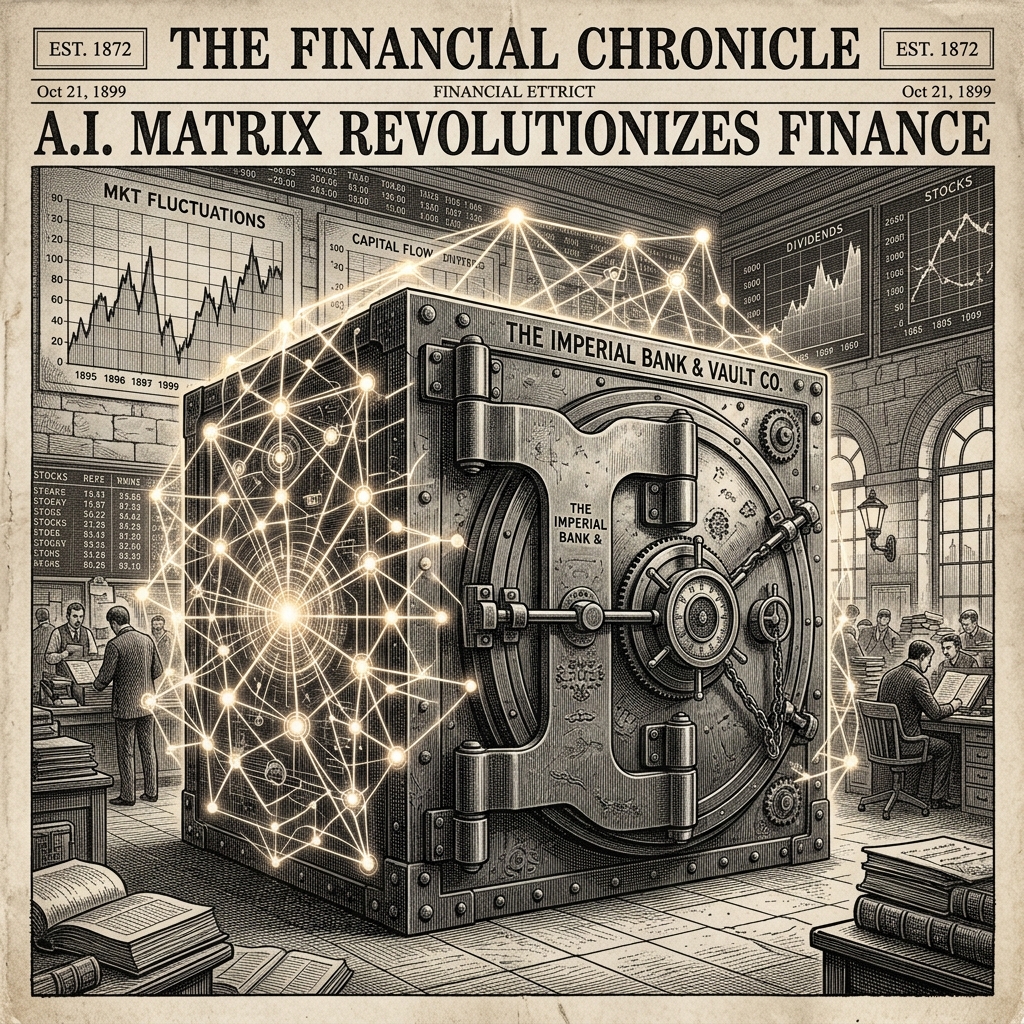
In rigorous simulated environments, FINTECH SENTINEL reduced false-positive flags by 73% compared to traditional rule-based systems. It successfully identified 95% of synthetic identity fraud attempts and maintained a processing throughput exceeding 10,000 transactions per second with a latency of less than 50 milliseconds.
| SABRIC Threat Vector | FINTECH SENTINEL Mitigation |
|---|---|
| Remote Access Trojans (RATs) | LSTM networks analyze temporal user behavior sequences to detect non-human navigation speeds. |
| Synthetic Identity Creation | Isolation Forest algorithm partitions multi-dimensional demographic data. |
Part 3: AGRI-INTELLIGENCE and the Water Crisis
Agriculture is the foundational bedrock of the South African economy. However, the sector is under severe threat. The second core project, AGRI-INTELLIGENCE, addresses the critical need for technological intervention. AGRI-INTELLIGENCE is an AI-driven platform delivering predictive insights for crop yield optimization. The system ingests vast datasets, including real-time IoT sensor data, meteorological forecasts, and historical yield records.
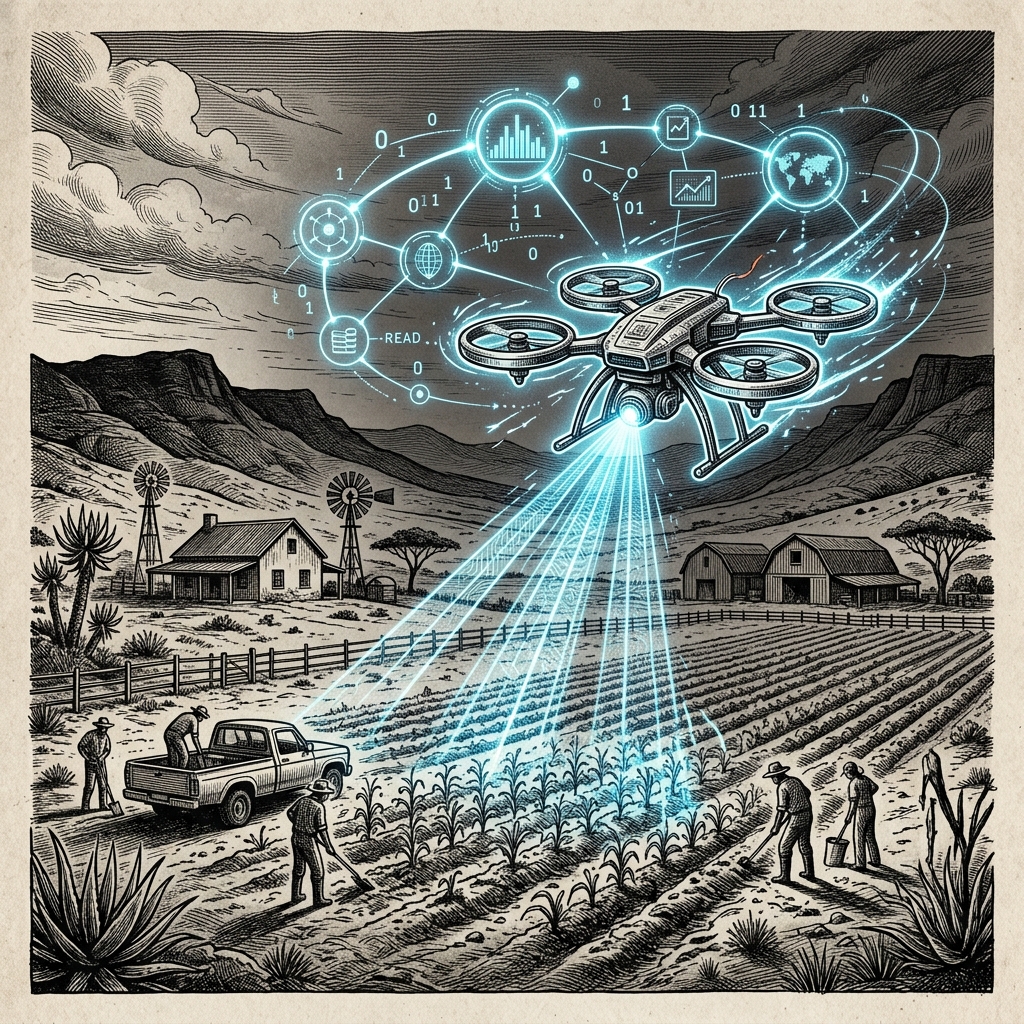
In pilot deployments, AGRI-INTELLIGENCE predicted crop yields with a 92% accuracy rate across diverse environments. Critically, it enabled an 18% reduction in total agricultural water usage through algorithmically optimized irrigation schedules, leading to a net average farm profitability increase of 10-15%.
Part 4: GRID-GUARDIAN and the Municipal Energy Spiral
While the era of national load shedding has evolved, the transition toward decentralized renewable energy sources requires sophisticated AI solutions. GRID-GUARDIAN functions as an advanced Virtual Power Plant (VPP) manager. It utilizes predictive algorithms (Facebook's Prophet library) to forecast localized energy demand against available solar PV generation. By analyzing forecasts, it intelligently dispatches battery energy and provides real-time telemetry.
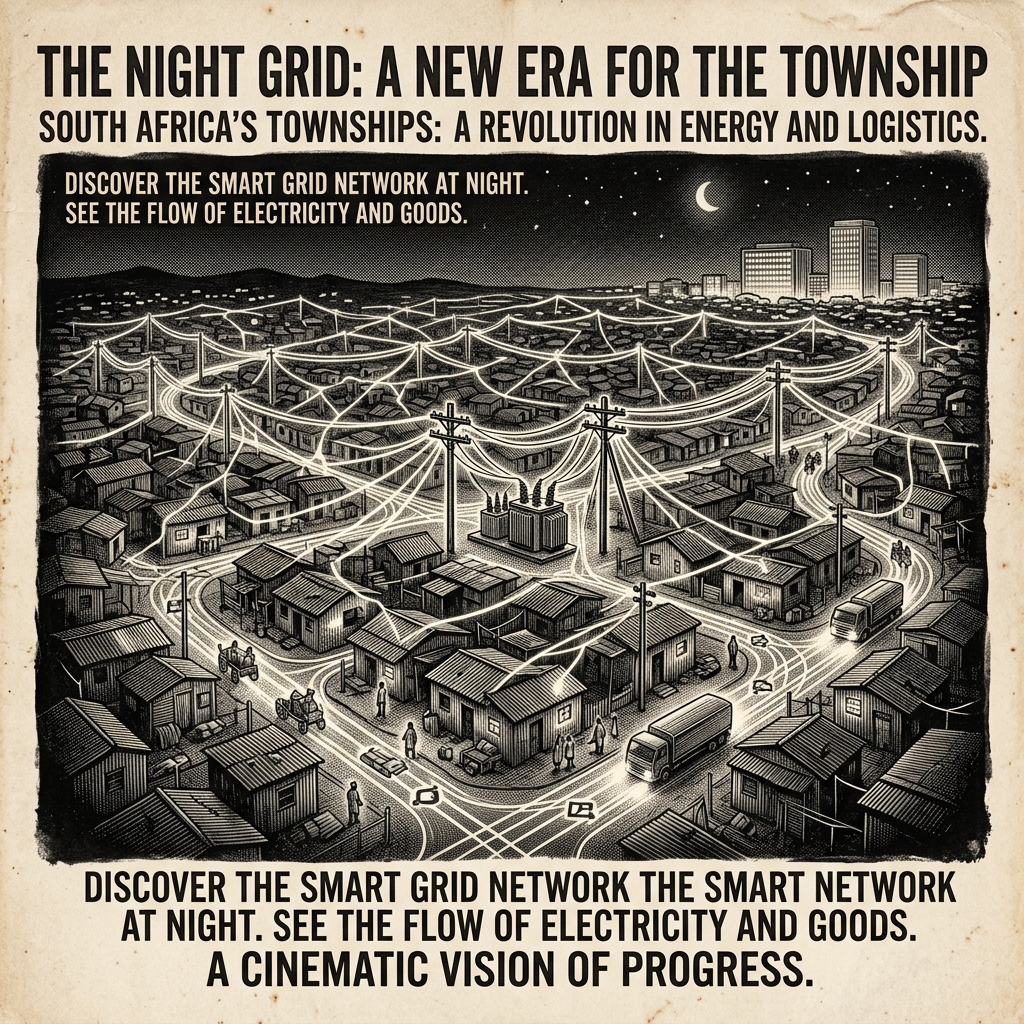
GRID-GUARDIAN successfully reduced reliance on expensive grid power by 40% during peak tariff hours, drastically reducing the financial exposure of the user trapped in the municipal tariff death spiral.
Part 5: LOGI-FLOW SA & The Township Economy
South Africa's diverse spatial geography presents unique hurdles. LOGI-FLOW SA provides a contextualized solution. It is a logistics platform engineered to provide intelligent route optimization using Google OR-Tools to solve the Vehicle Routing Problem (VRP). The predictive module employs Scikit-learn's Random Forest Regressor to forecast delivery times.
Through algorithmic optimization, LOGI-FLOW SA reduced average last-mile delivery times by 20% and improved on-time delivery rates by 15%, specifically bypassing the lack of formalized municipal street addressing in sprawling townships.
Part 6: Expansion Frameworks (HEALTH-AI & EDU-BOT)
The portfolio outlines two theoretical expansion blueprints. HEALTH-AI SA is conceptualized as a mobile-first wellness assistant utilizing NLP and LLMs to offer tailored medical triage for rural populations. EDU-BOT SA is an adaptive learning platform utilizing Collaborative Filtering algorithms to map complex skill networks, re-engineering the education-to-employment pipeline to cure the Human Capital Paradox.
Synthesis: The portfolio models a highly integrated digital ecosystem necessary for the stabilization and advancement of the South African economy. By intercepting the nation's most severe friction points—financial fraud, water scarcity, municipal grid failure, and logistical inefficiency—with precise, AI-driven interventions, MENS MERCATUS establishes a definitive benchmark for high-impact technical capability.

END OF VOL. 01
The sovereign individual delegates the mundane to the machine, and reserves the mind for conquest.
← RETURN TO DASHBOARD